INKR Localize
Overview
For INKR's content operation department members who need to improve their localization output to meet the growing demand, INKR Localize is an enterprise localization & translation software that caters specifically to comics.
Unlike other graphic design software substitutes, INKR Localize is 100% cloud-based and user-friendly, enabling INKR to employ translators from all around the world, expanding the pool of potential workforce.
I spearheaded and single-handedly handled the design of the INKR Localize from ideation to launch.
My Contribution
Product Strategy
Concepts & Ideation
Information Architecture
Enterprise UI/UX Design
Team
1 designer
2 product managers
8 engineers
Year
2021
Problem Statement
From the initial rounds of field trips to content owners in Korea, Japan, and China, we've learned that the need to localize comics is apparent and consistent with all content owners, content publishers, and agencies who want to distribute overseas. When attempting to handle localization in-house, these are the pains that those companies face :
- High cost - the cost of localizing comics into another language is high as the common practice requires the overheads of setting up teams of translators, proofreaders, editors, cleaners, typesetters and various managerial personnels.
- Dissatisfaction with the translation quality at delivery - often, quality of translation is compromised by logistics (the pool of quality translators that the aforementioned team can have access to, the cost of operation and the deadlines for delivering). This pain was echoed by almost every company we have talked to when they constantly seek validation for quality assurance for the translation.
- Long delivery time - manual processes and application of several tool sets used in the current practice of localizing comics hinder significantly the time-to-market of the localized titles. Weeks or months are a common expectation to localize a title with an average of 30-40 chapters.
Several companies would opt for outsourcing localization of their content, to either a commissioned localization service or to the distribution platforms that are interested in their content. Even then there are concerns that persist such as :
- The lack of transparency in the processes, quotation, as well as the production of localizing the content, once handed over.
- The lack of control for content owners as with most commissioned services - the client can only be involved in the very beginning and at the last and final deliveries of the translations
- The quality and flexibility in the final delivery of the localized content are dictated by the service providers. Most localization companies either specialized in only delivering the translation so that the content owners can then take care of the typesetting, etc.
Hence, in 2019, the Localization Tool Pre-Alpha was created as a cloud-based tool that aimed to make the entire localization process much more efficient and cost-saving.
After two years of developing and running the tool, we've learned a lot about the users, process and have equipped ourselves with a lot of technical capability. On the other side, as we were in such a hurry to launch it, we took a lot of shortcuts in the development, such as parking the tool on Jira, server-side processing...
In 2021, we took all the learnings we got, coupled with our newfound capabilities, to create a new and improved system for localization, called INKR Localize System.
Scope and Contraints
INKR Localize is a cloud-based tool that automates manual processes, streamlines workflows and collaboration while being 100% transparent to its clients.
- Cut Down Cost & Time
Automate many time-consuming and repetitive tasks, lowering the skill requirements for workers. - Offer Full Transparency
Customers can monitor the localization and get involved in the process. - Partners Retain Full Rights
The localized version belongs to the content partners, not INKR Comics.
Domain Knowledge
Two years of building and operating the Localization Tool as a Jira extension gave us a deep, first-hand understanding of users and their workflows. Rather than starting from scratch, we carried those learnings directly into the design of INKR Localize System. It informs us everything from the structure of the IA to the each individual interactions.
User Definition
Localization is a multi-role operation. Designing the right experience required a clear definition of who does what within the system.
- Project Manager — ensures each project is delivered on time and on budget. Responsible for recruiting freelancers, assigning jobs to team members, and generating invoices for payment.
- File Handler — receives raw comic files from the publisher, processes them to prepare the pages, and uploads them to the system for the team to work on.
- Translator — converts dialogue and text from the source language (Korean, Japanese, or Chinese) into English.
- Cleaner — removes original text from raw comic pages, producing clean canvases ready for the translated text to be placed.
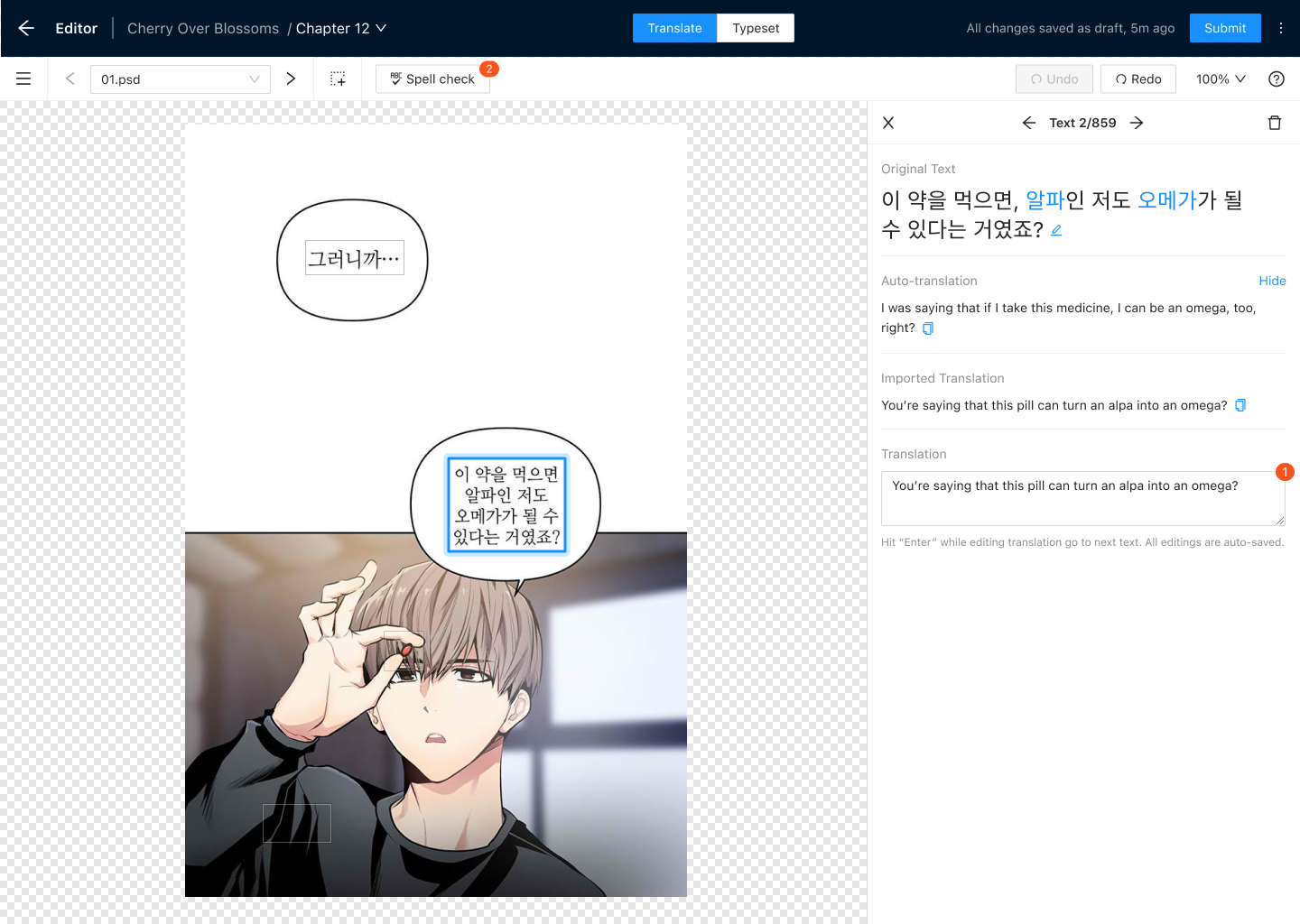
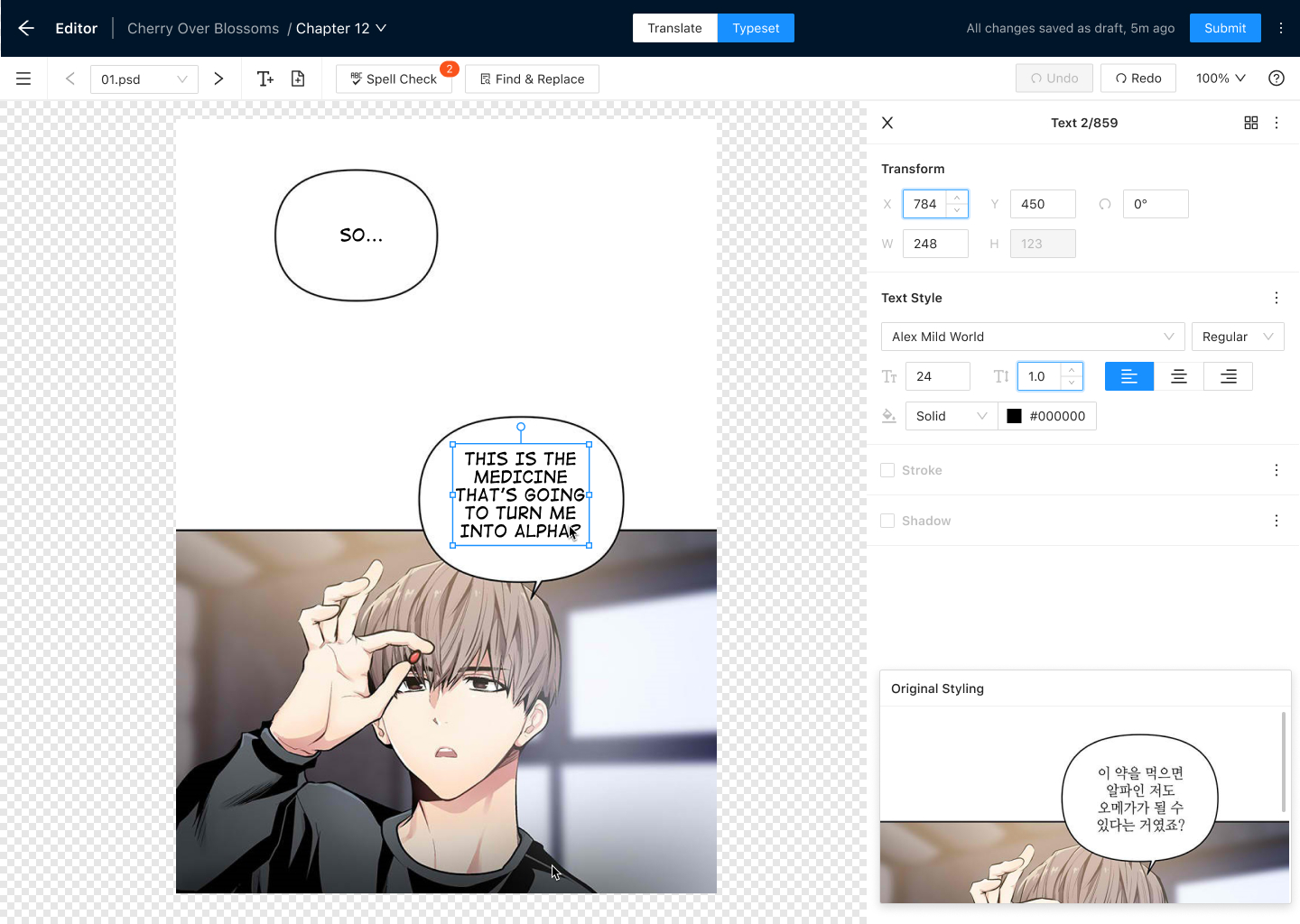
- Typesetter — takes the translated text and places it onto the cleaned pages in a visually coherent and readable way.
Entities
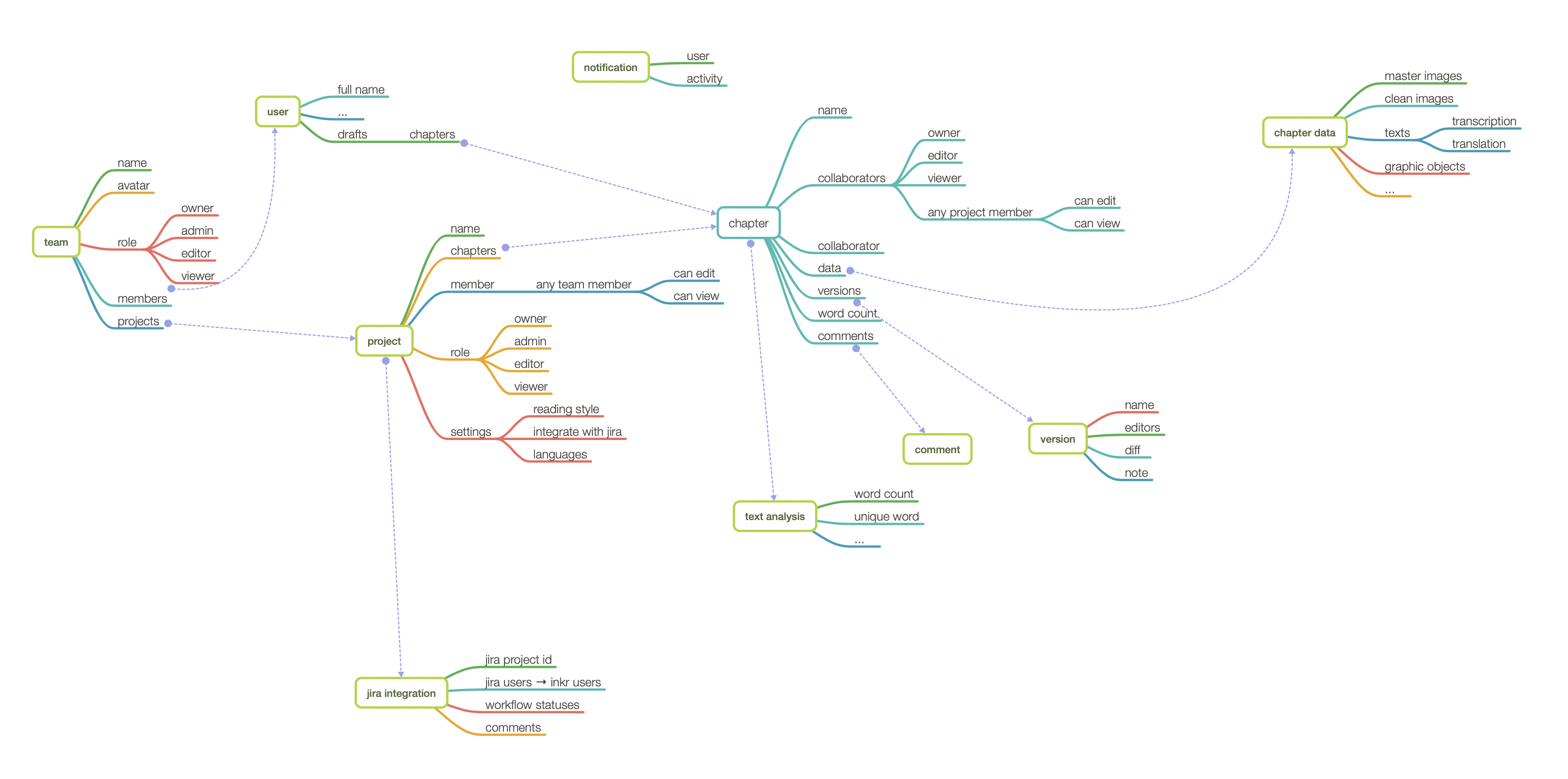
Before jumping into flows, I mapped out the core entities of the system. This helped anchor the design, ensure nothing was overlooked, and gave the engineering team a shared model to align on. All interactions and workflows in INKR Localize System revolve around four entities:
- Teams — organizational units that group users together under a common working context.
- Users — individuals assigned to one or more roles within the system.
- Projects — top-level containers representing a comic title being localized, with associated metadata, timelines, and budgets.
- Chapters — the individual units of work within a project, where all localization tasks are carried out.
Information Architecture
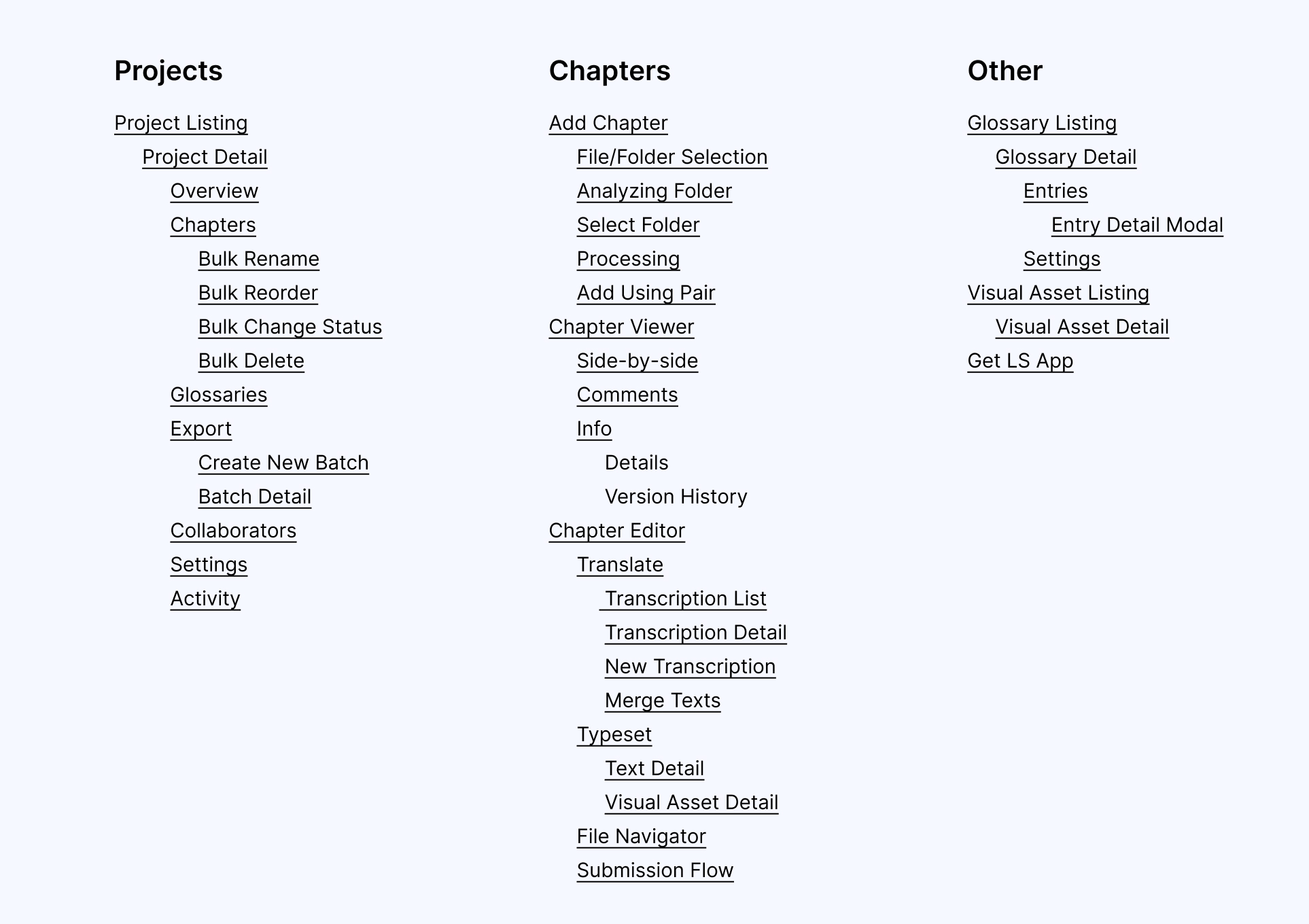
Given the breadth of the system — spanning multiple roles, workflows, and management surfaces — mapping out the information architecture early was essential. It ensured the navigation was coherent, reduced the risk of scope creep during design, and helped the team reason about the product as a whole. The IA was organized into three categories:
- Projects — pages for browsing, creating, and managing localization projects, including assignment, scheduling, and budget tracking.
- Chapters — pages dedicated to the core workflows of file handling, translation, cleaning, typesetting, and proofreading.
- Other — supporting surfaces such as user management, team settings, invoicing, and reporting.
Finalized Design
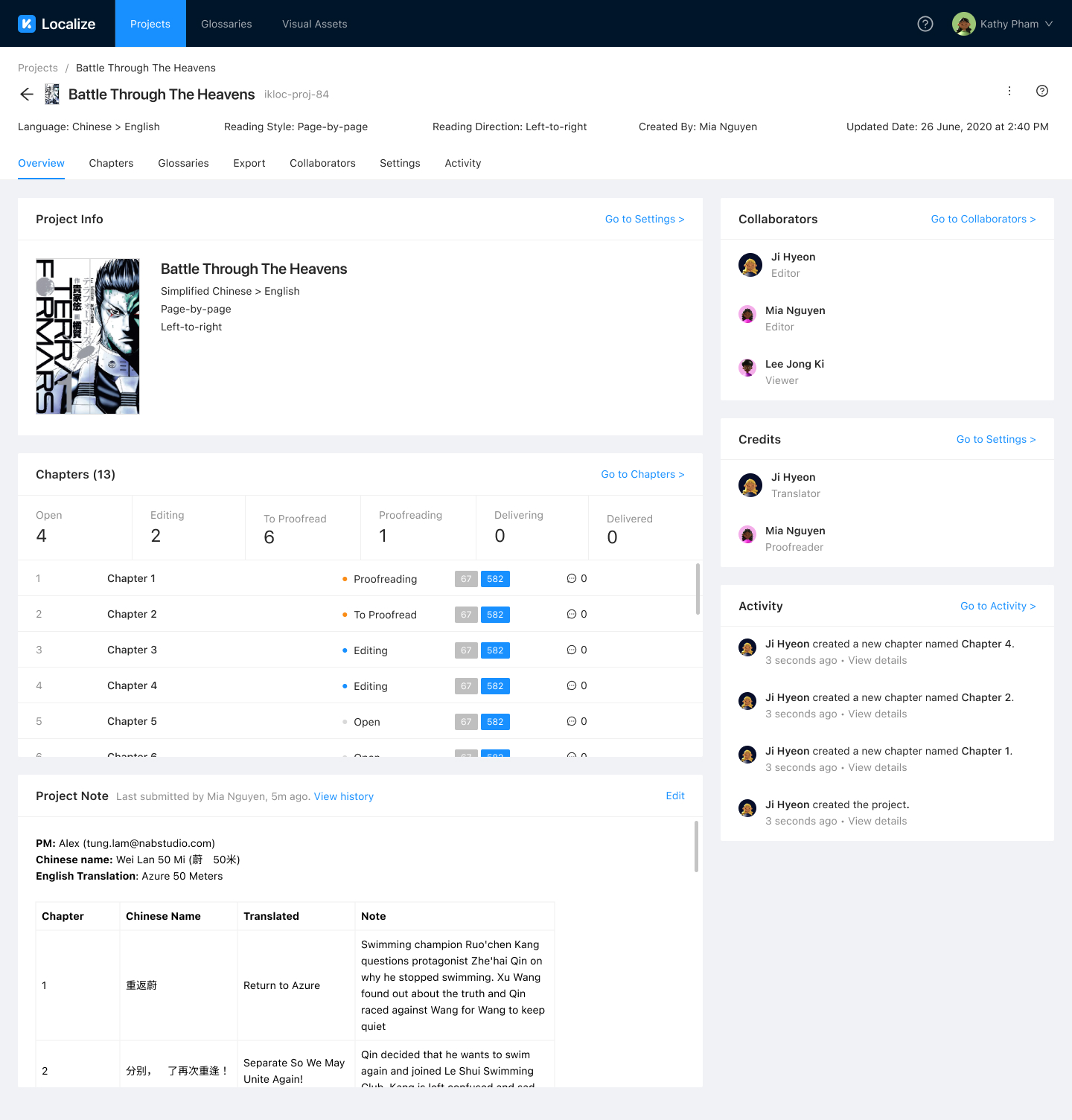
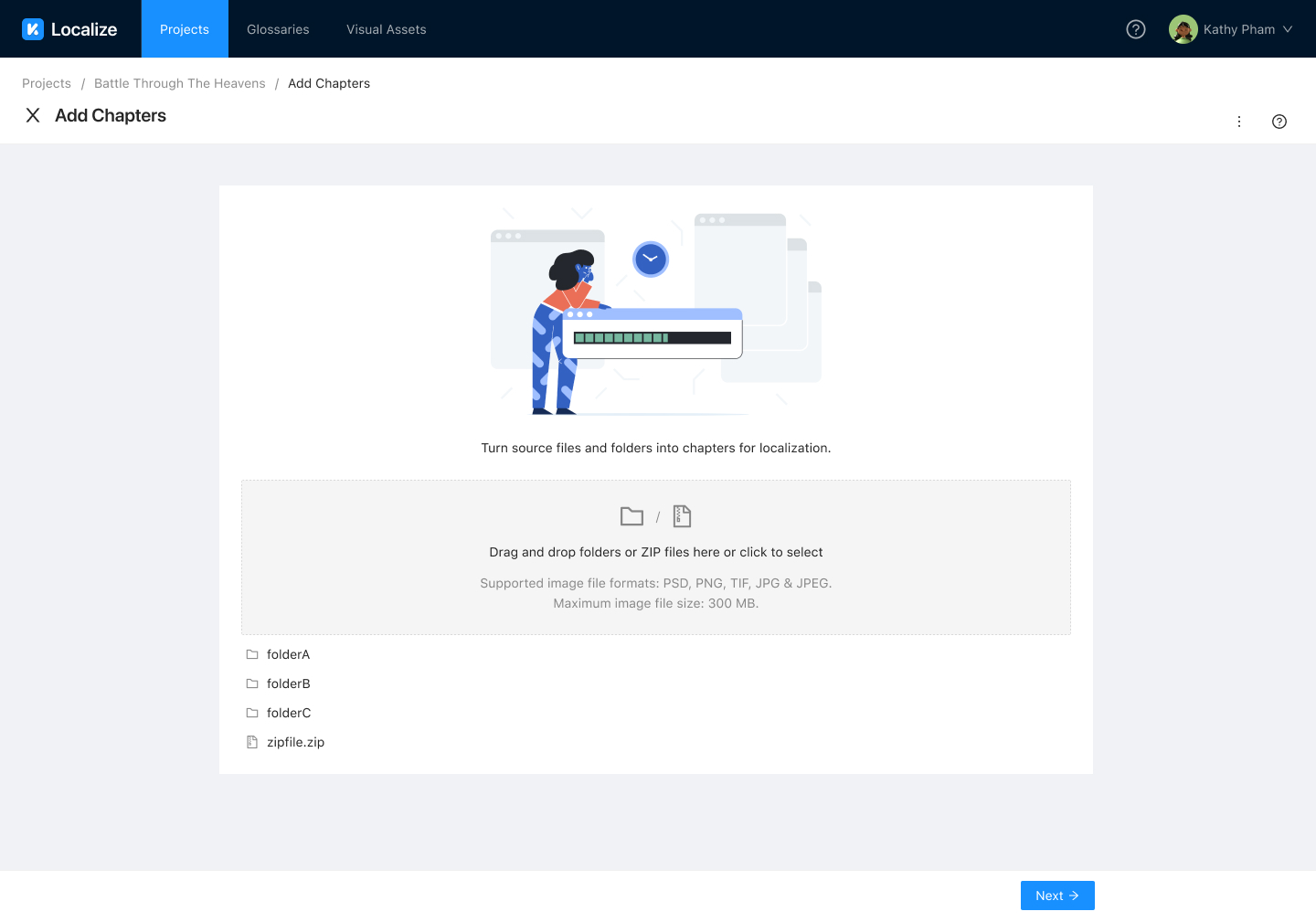
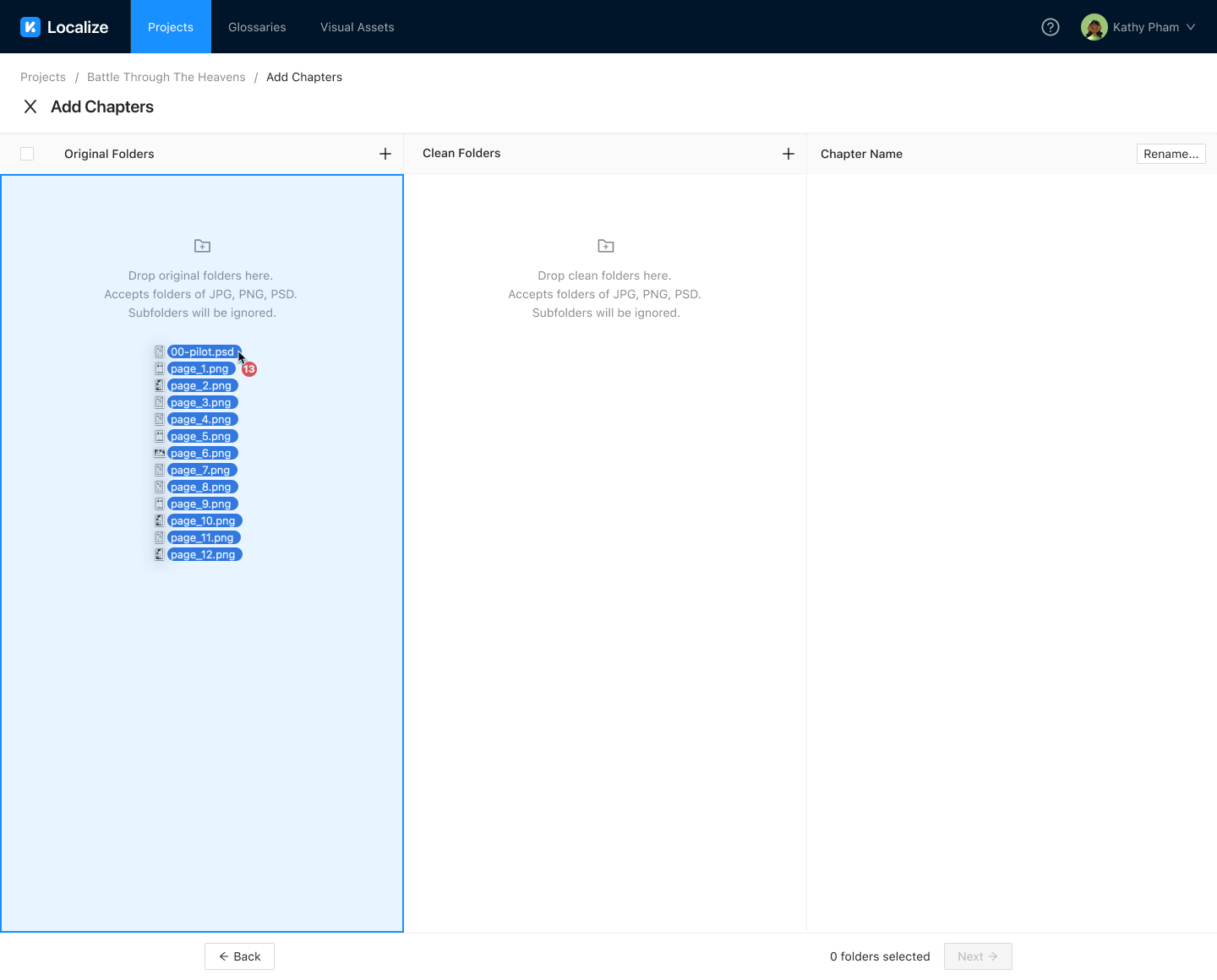
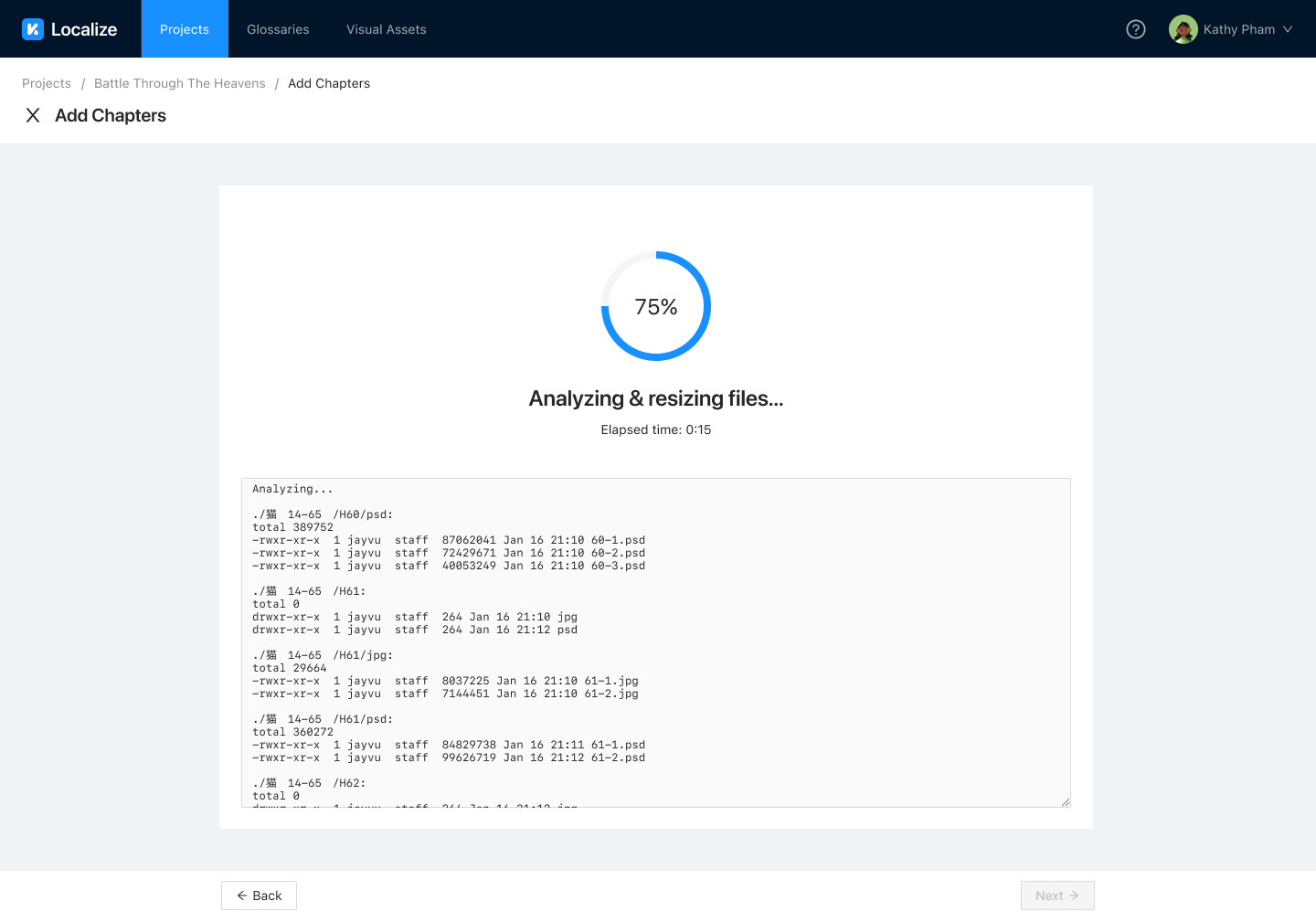
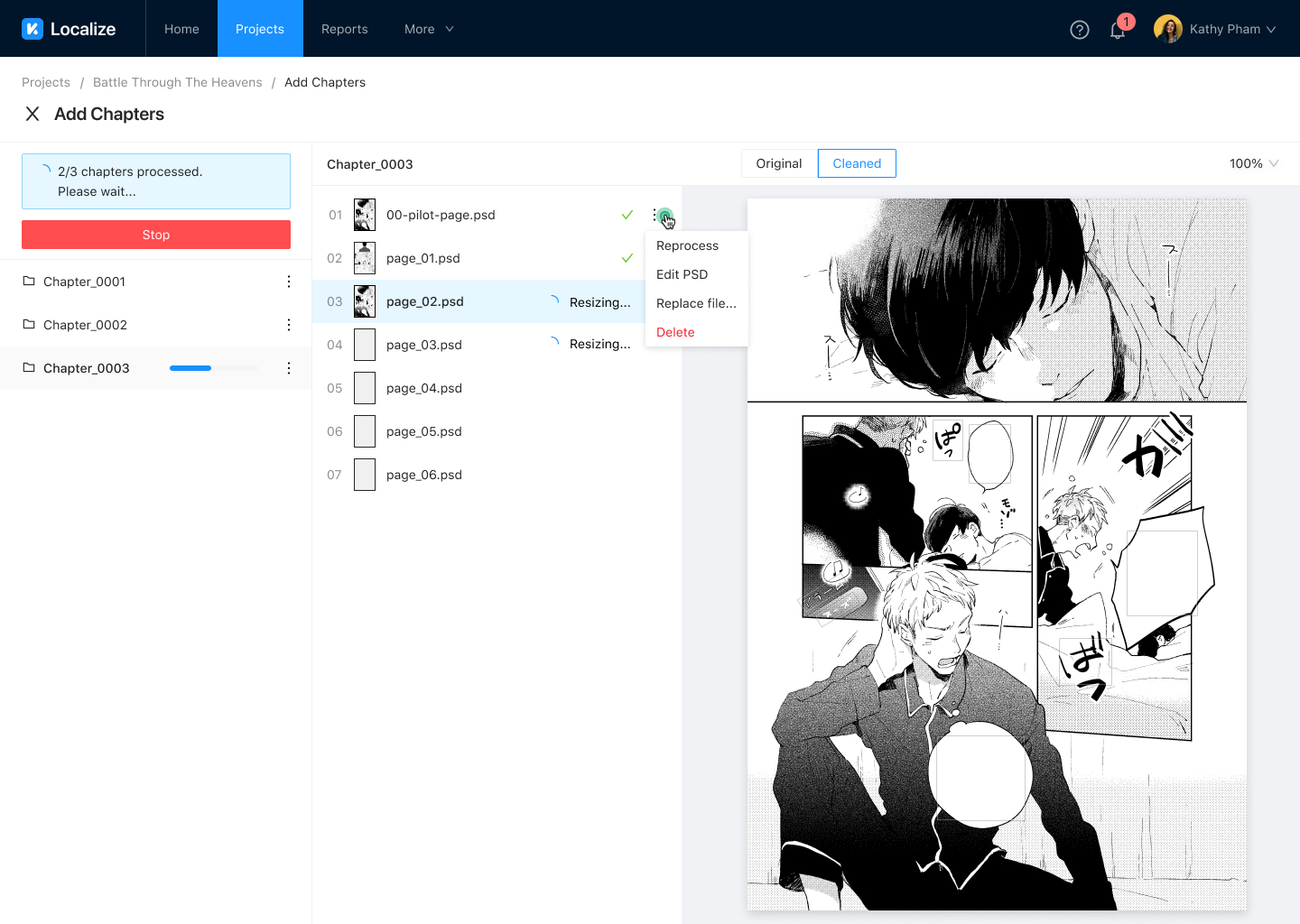
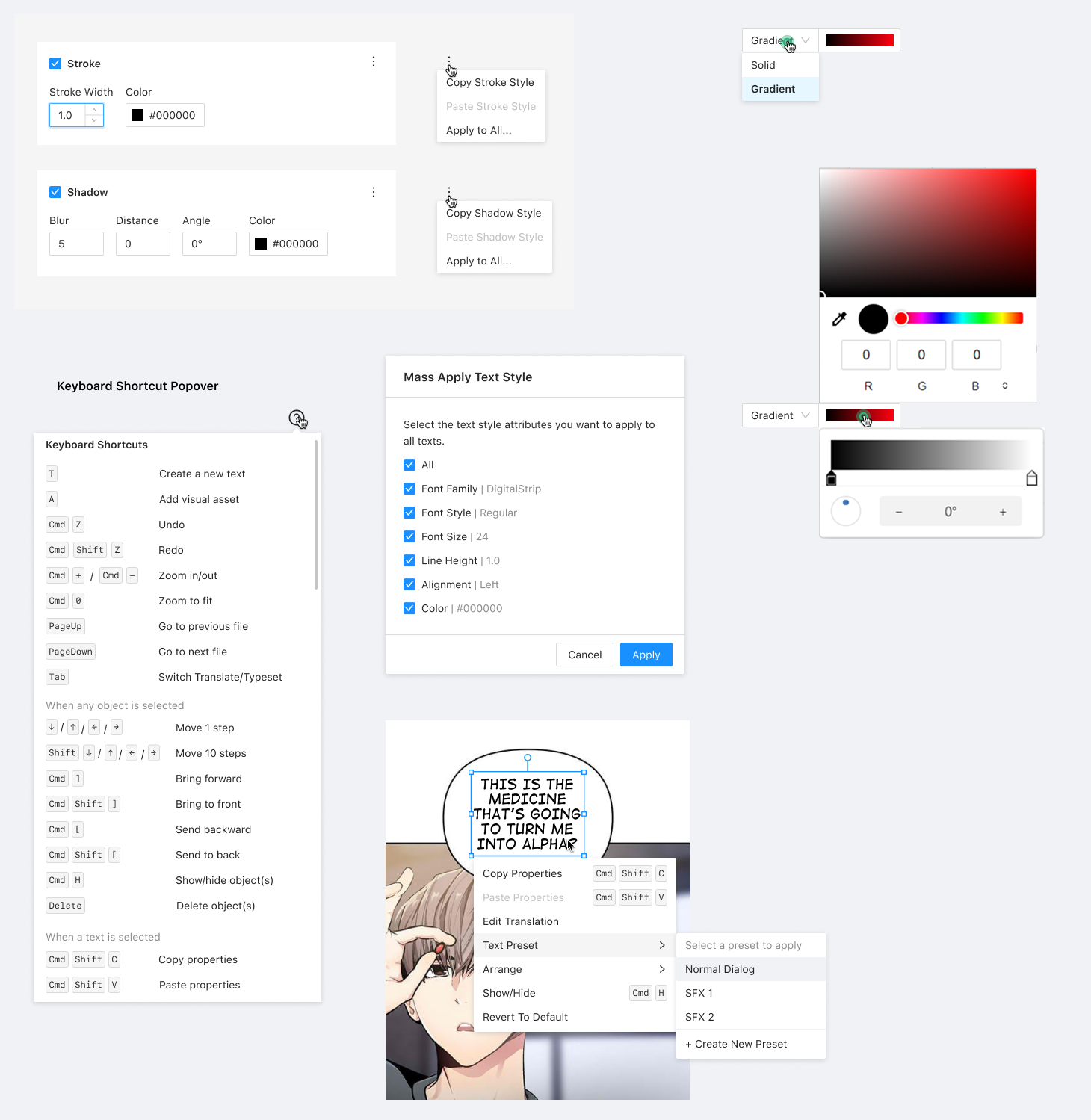
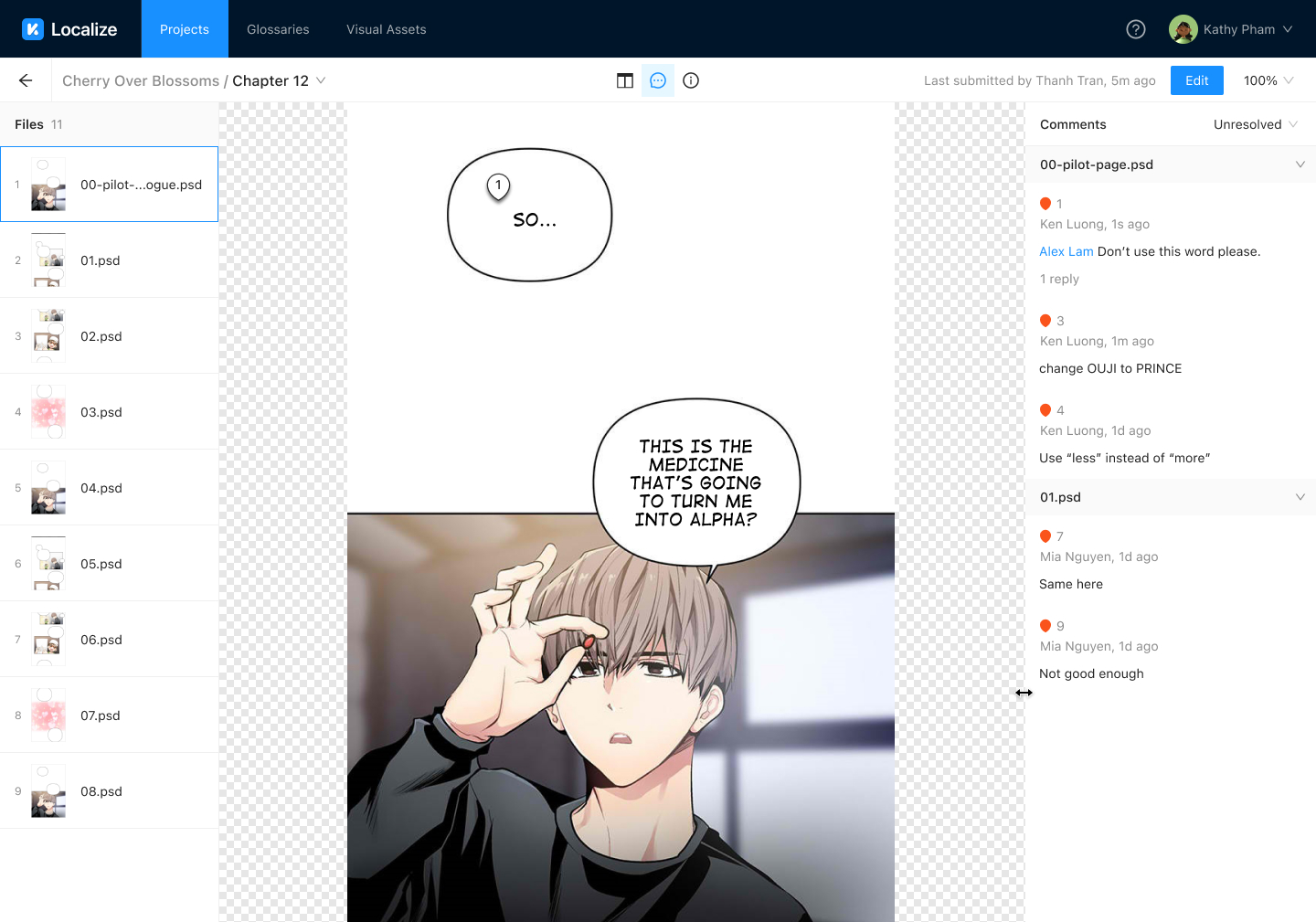
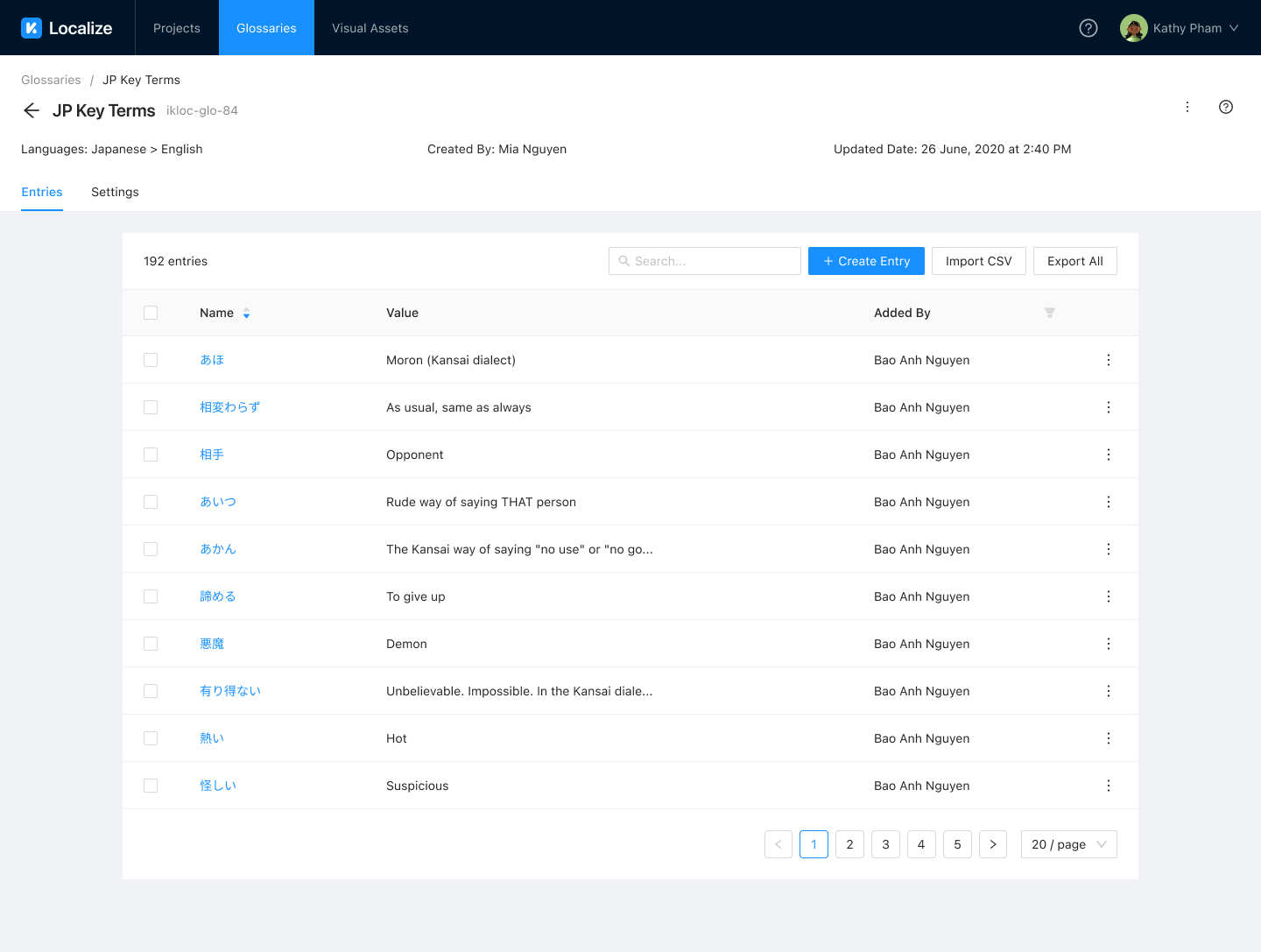
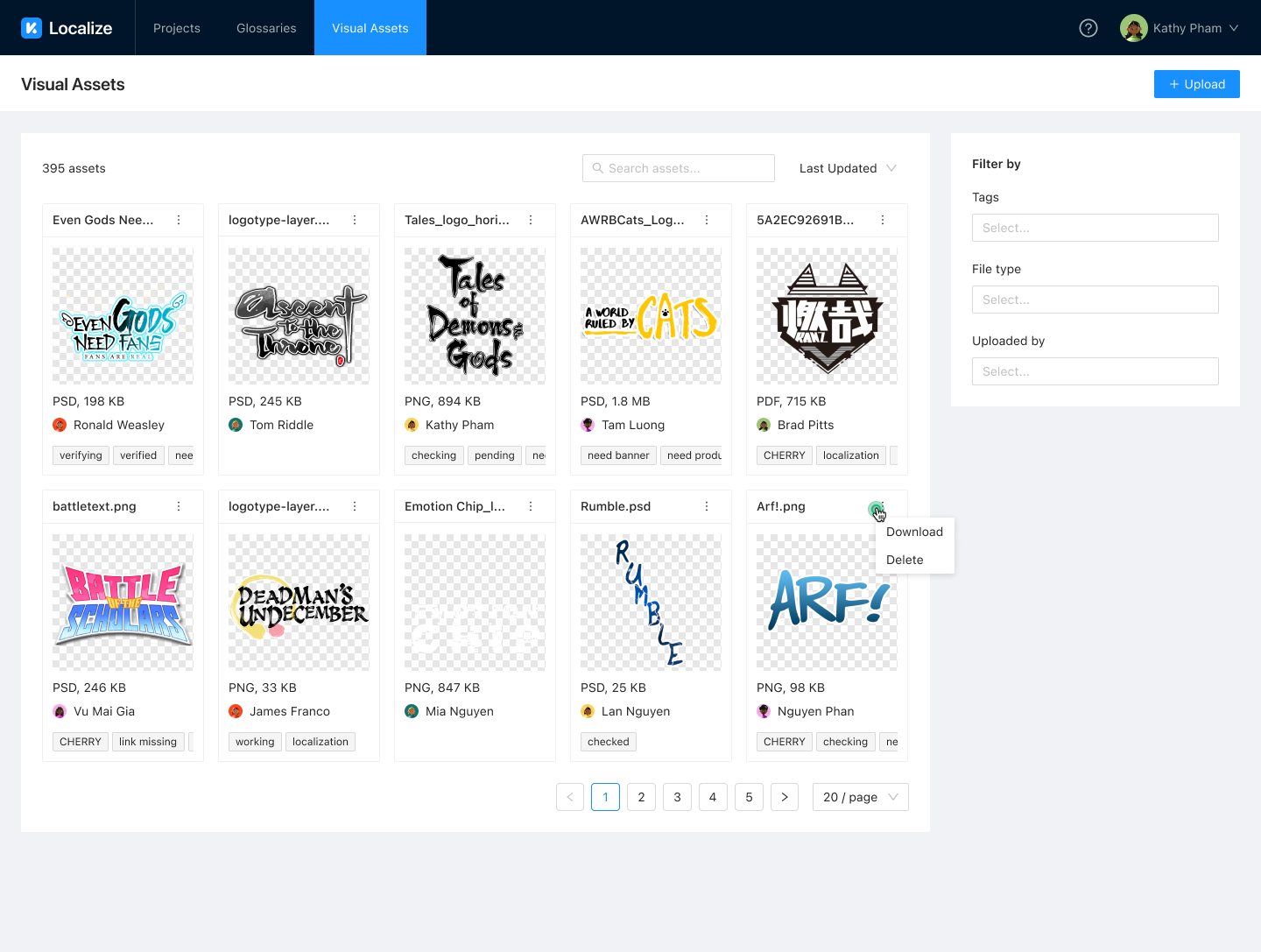
With a grounded understanding of users, entities, and system scope, I executed the design in Figma using Ant Design as the component library — a deliberate choice given the enterprise nature of the product and the need to move fast without sacrificing visual consistency.
Outcome
Launching in early 2021, INKR Localize quickly became the backbone of INKR's localization business. By the middle of the year, through using the product, the content operation department was able to recruit more than 200 freelancers worldwide while maintaining a small in-house team of 3 project managers. As a result, 300 comic titles originally in Korean, Chinese, and Japanese were successfully localized and published to INKR Comics, to be enjoyed by comic readers all around the world.